

Not a replacement for training, but potentially a way to amplify the benefits as natural production declines with age. Because it comes from the mitochondria specifically, the organelles responsible for producing your cells’ energy, MOTS-c’s signaling reach into metabolism is broader than what most peptides manage. Do not leave it at room temperature or reconstitute multiple vials in advance.
In 2015, MOTS-c was discovered by a research team under the guidance of Changhan Lee from the Pinchas Cohen laboratory at the USC Davis School of Gerontology. Typically, these are used together instead of being selected individually. Store immediately in the refrigerator and consume within 30 days. The same concentration and 25 units are found in a 50mg vial containing 2.5 mL. A 10mg vial with 0.5 mL yields 20mg per mL, meaning that 5mg corresponds to 25 units on a U-100 insulin syringe.
The U-100 insulin syringe is the standard option, as its marking system ensures precision in dosing small volumes. Generally — a small-gauge, short insulin needle—usually 29–31 gauge and measuring 5/16 to 1/2 inch (8–13 mm)—is used for the subcutaneous drawing and injection of MOTS-c. Intended for single use (plain sterile water contains no preservatives; therefore), any vial combined with it must be used right away and discarded, rendering it unsuitable for multi-dose peptides. The presence of the preservative prevents microbial proliferation, which enables the use of a reconstituted, multi-dose vial for approximately four weeks.
Understanding what is common versus rare helps you calibrate expectations and recognize when something requires attention. The most frequently reported side effects fall into predictable categories based on the mechanisms we just discussed. Someone with insulin resistance may respond differently than someone with excellent glucose control.

Research is also examining MOTS-C for its potential in managing metabolic disorders and providing protection against obesity and insulin resistance. As a mitochondrial-derived peptide, MOTS-c activates AMPK, boosts glucose metabolism in skeletal muscle, enhances insulin sensitivity, and supports mitochondrial health. Through various mechanisms, including direct effects on adipose tissue and indirect effects from skeletal muscle glucose utilization, MOTS-c impacts fat metabolism. To regulate glucose metabolism (MOTS-c where to buy MOTS-c peptide specifically targets skeletal muscle), the body’s largest insulin-sensitive tissue. Changes in metabolism akin to those observed in animal studies are predicted to manifest over weeks instead of days (and should be evaluated using objective measures), such as lab results and body composition, rather than subjective feelings. In the realm of research, MOTS-c is being investigated for its effects on insulin sensitivity, glucose metabolism, metabolic homeostasis, exercise capacity, and its involvement in age-related metabolic decline.
An increase of 7% in maximum lifespan was noted, rising from 1,047 to 1,120 days. The median lifespan of treated mice increased by 6.4%, going from 912 to 970 days. Remarkably, aged mice receiving MOTS-c for only seven days exhibited insulin sensitivity comparable to that of younger mice.
Whatever MOTS-c does looks conditional on training. In the same research paper, metabolic changes in the skeletal muscle of treated mice were only observed if the subjects had engaged in exercise. Once mixed, refrigerate at 2 – 8 °C and use within about 28 days. Store the lyophilized vial in a cold and dark environment. Gently roll the vial and allow a few minutes for complete dissolution. Instead of squirting onto the powder, pour the bacteriostatic water down the inner wall of the vial.
For step-by-step guidance on peptide reconstitution (including mixing technique and storage), read that guide before you handle your first vial. Change the vial size or the water and the units change with it, which is where most dosing mistakes happen. On a U-100 insulin syringe, 1 mg of MOTS-C is 20 units when a 10 mg vial is mixed with 2 mL of bacteriostatic water. Crashing energy — creeping body fat, a slowing metabolism and insulin resistance are the “inevitable” signs of aging most people accept without a fight. The MOTS-C dosage I run and recommend is 1 mg injected subcutaneously every morning, 5 days on and 2 days off, for 8 weeks, followed by 8 weeks off. The MOTS-C dosage I run and recommend is 1 mg injected subcutaneously every morning, 5 days on and 2 days …
Protocols vary from 5mg two to three times weekly to smaller daily doses. Effects develop over weeks rather than days. Future work might explore MOTS-c for specific conditions including neurodegenerative disease, cardiovascular disease, and sarcopenia. If clinical development proceeds successfully, MOTS-c or its analogs could eventually gain regulatory approval for specific indications. Metabolic adaptations occur over weeks — not days.
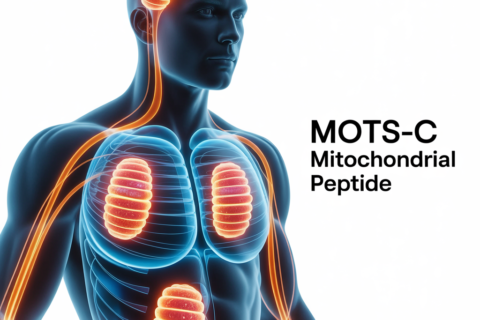
In research settings, the peptide is being investigated for individuals unable to exercise or as a supplement to exercise, rather than as a substitute. Being studied as an “exercise mimetic,” the peptide activates some of the same molecular pathways as exercise, yet does not provide the full benefits of physical activity. The guide for evaluating peptide suppliers outlines the criteria for selecting vendors of research-grade compounds.
Each batch is sent to Freedom Diagnostics for independent testing, which ensures knowledge of what is contained in the fragile vial. If you intend to try MOTS-c, the quality is crucial here compared to most peptides because it degrades rapidly once mixed. MOTS-c performs multiple functions by engaging a fundamental metabolic pathway. Recent studies reveal its ability to protect insulin-producing cells in the pancreas from aging, which is significant for long-term metabolic health.
Everest’s larger vial is 40mg — contrasting with the 50mg claimed by some vendors. Due to stability concerns, quality is even more critical for MOTS-c compared to most peptides. Should the proposed rulemaking be approved (MOTS-c may transition from a gray-market research peptide to a physician-prescribed compounded medication), leading to improvements in quality and standardization. What that vote does and doesn’t mean matters here.
